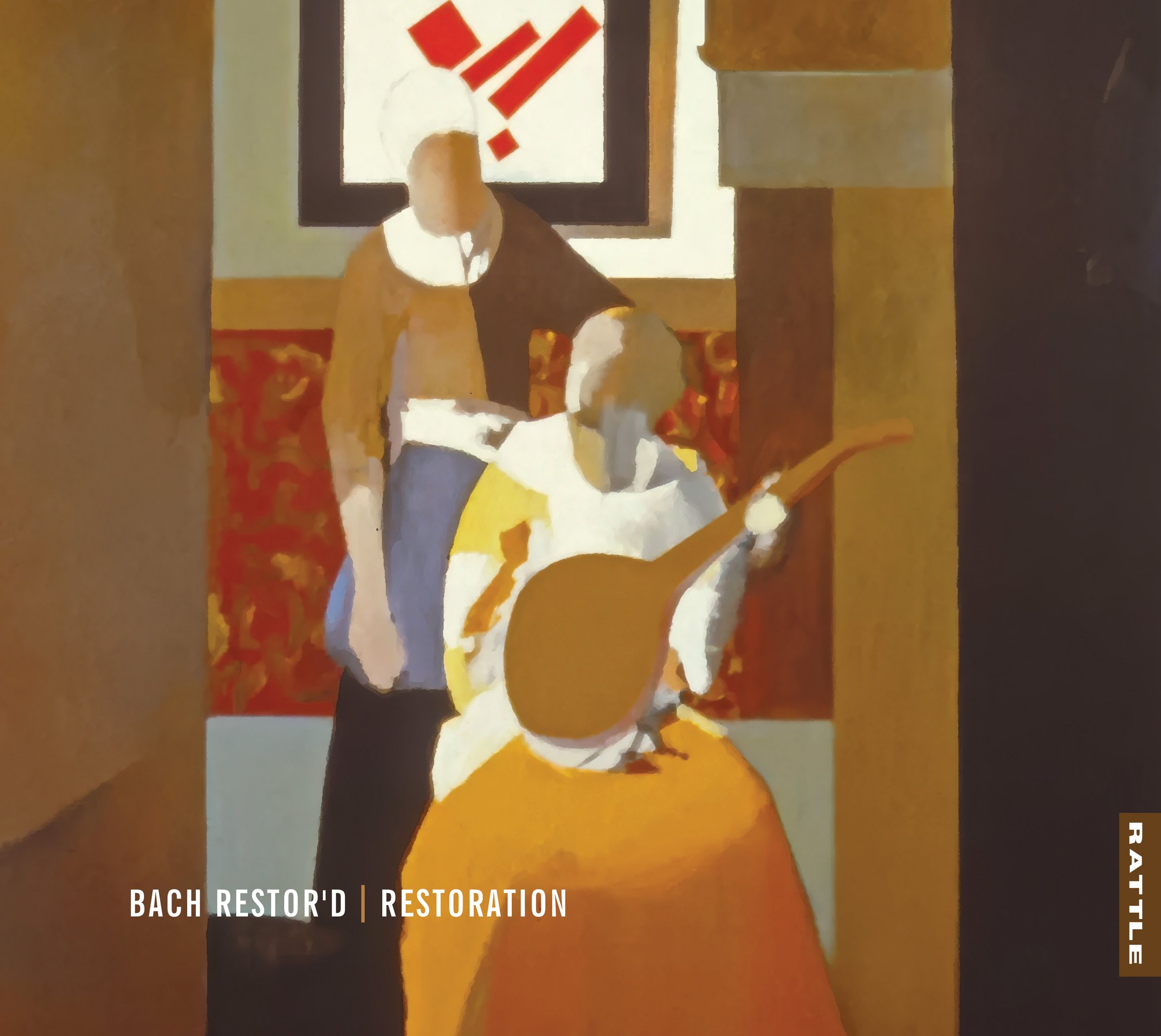
Bach Restor’d
Restoration
1. Overture 07:35
2. Courante 03:13
3. Gavottes I & II 04:19
4. Passepieds I & II 03:35
5. Sarabande 03:11
6. Bourrées I & II 03:45
7. Gigue 03:07
8. Echo 03:26
Released: 15 October 2026
Catalogue: RAT-D174
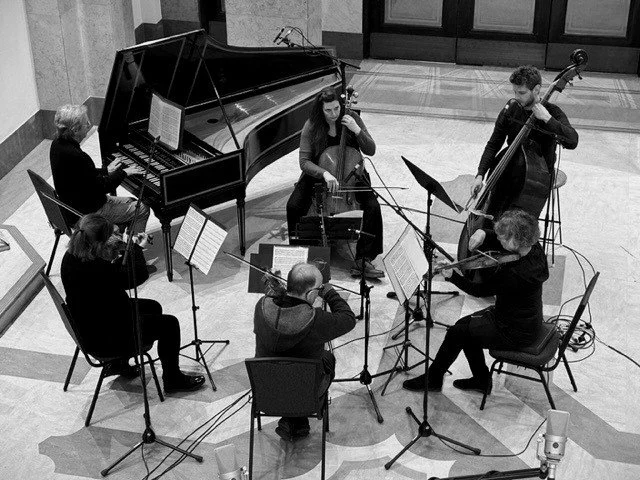
RESTORATION BAROQUE ENSEMBLE
Restoration is one of New Zealand’s most experienced and accomplished baroque ensembles. They use original instruments and historically informed playing styles and techniques to recreate the musical spirit of the baroque era, with its subtlety, flexibility, rhythmic energy and rhetorical inflections. This vivid and expressive language, so different from that of our own time, opens a window into the wonderfully foreign world of the past.
The ensemble was formed by baroque violinist Bronwen Pugh and harpsichordist Robert Petre on their return to New Zealand from post-graduate study and professional experience in Europe. Their teachers and mentors have included leading international experts, baroque violinist Sigiswald Kuijken, and harpsichordists Gerhard Kastner and Colin Tilney.
Restoration takes its name from that colourful era, the restoration of Charles II to the English throne in 1660. The music of this time is central to the group’s repertoire, which extends from Purcell, Bach and Handel, to Haydn and Mozart and beyond. The name also suggests the art restorer’s process of revealing the original colours and dramatic impact of a treasured artwork. Their collaboration with John Drawbridge, one of New Zealand’s most significant and influential 20th-century artists, encapsulates their shared aim to acknowledge the designs and techniques of the historical past and their influence on art and culture in contemporary Aotearoa. This is seen particularly in Drawbridge’s series of paintings and prints reworking images by 17th-century European masters. His abstract works also evoke the way that colour, pattern, and structure create their ineffable effect in music, particularly in the music of the baroque.
Restoration has worked with local baroque specialists and visiting artists from the UK, Europe, USA, and Australia, touring throughout New Zealand. They have performed at festivals and made numerous recordings for Radio NZ and album releases in New Zealand and London. They specialise in exploring the rich and intricate relationship between baroque dance and music, collaborating with local dancers and international experts, including Wendy Hilton, giving performances and workshops. The current members have been core members of NZ Barok, New Zealand's baroque orchestra based in Auckland. This includes NZ Barok founder/director Graham McPhail, long-term colleague Alison Salmons, and younger-generation leaders Emma Goodbehere and Eric Scholes. In recent years, they have worked extensively with Lucinda Moon, one of Australia’s foremost baroque violin specialists.
For more information, please visit the Restoration website HERE
THE FRENCH OVERTURE
The French Overture is a superb model of the 17th-18th century overture suite. The initial Overture movement is vast and splendid, with an over-arching symmetrical structure, a majestic processional opening and closing that frames a multisectional central fugue. This is followed by seven sets of dances, which exemplify most of the dance types popular at the time.
The characteristic rhythmic inflection and tempo of each dance—known from contemporary choreographies and dance treatises—ensures the rich variety of style and mood of the whole work. Notable by its absence here is the Allemande, which appears in every other solo instrumental suite by Bach, but in none of his orchestral suites. The absence of the Allemande in the French Overture is further evidence of its original conception as an orchestral rather than solo harpsichord work.
Both the French Overture and its companion piece, the well-known Italian Concerto, can be seen as examples of the long-standing tradition in the baroque period of arrangements of orchestral and chamber music for keyboard, to make them more accessible to both professional musicians and music enthusiasts.
It is generally accepted that a great many works written by Bach, particularly orchestral and chamber music, have been lost. Bach and his contemporaries would have composed dozens, even hundreds of these suites, as they were frequently required for court balls and other ceremonial occasions. Although this reconstruction of the French Overture must always remain just that, a speculative endeavour, it may nevertheless go some way to filling the gaps in the legacy of Bach’s genius.
01 Overture (7:34)
02 Courante (3:13)
03 Gavottes I & II (4:19) Alison Salmons (viola), Eric Scholes (violone)
04 Passepieds I & II (3:34)
05 Sarabande (3:10)
06 Bourrées I & II (3:44) Bronwen Pugh (violin), Emma Goodbehere (cello)
07 Gigue (3:06)
08 Echo (3:25)
Temperament: Werckmeister III, Pitch: a415
Recording by Restoration © 2026, all rights reserved